Santa Cruz airport encounter killing of Mehmood Khan
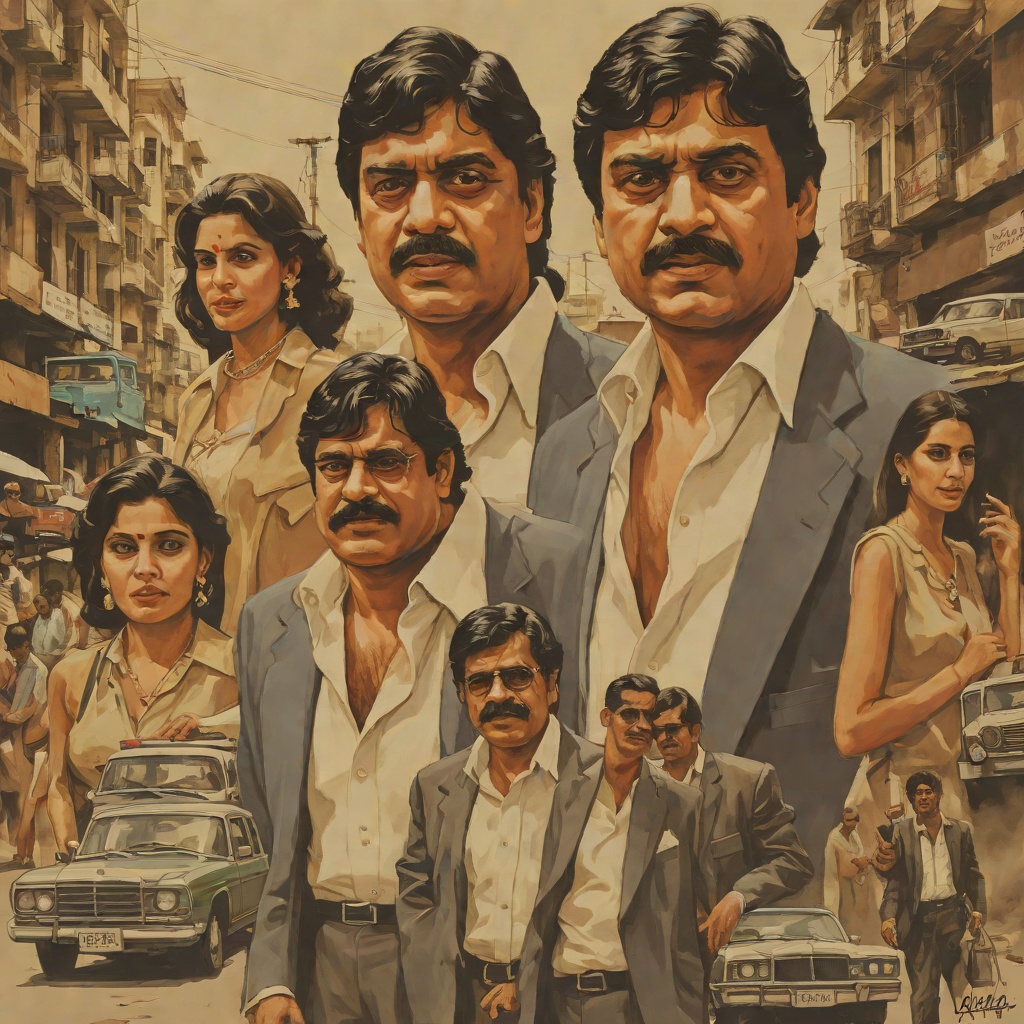
Mafia Queens of MumbaiThe Santa Cruz airport encounter killing of Mehmood Khan is a brutal and pivotal event in the book, a staged police 'encounter' that murders a wanted gangster and exposes the state's necropolitical power. The event is narrated through the eyes of his wife, Ashraf Khan, who witnesses the killing and is forced to confront the lie of the official narrative, transforming her from a protected wife into a grieving, hardened widow. The killing is a stark demonstration of how the state exercises power over life and death, particularly for those deemed expendable, and it serves as a traumatic turning point that reveals the brutal mechanics of the Mumbai underworld and its relationship with the police.
The Husband's Return and the Wife's Vigil
The event begins with a promise of reunion. Ashraf Khan, a strikingly attractive young woman, receives a phone call from her husband, Mehmood, who has been away for ten days. His voice is husky and loud, a sign of the international call, and he tells her, 'Jaan, I will be back this evening. Please come to the airport...' Ashraf is thrilled, sensing that he must have felt her unease and anxiety to see him. She rushes home to get ready, her overwhelming happiness a stark contrast to the violence that awaits. Ashraf had fallen in love with Mehmood at a friend's wedding and had married him without hesitation. In their five years together, his one aim had been to make her happy, and she embraced the freedom that marriage gave her, living the life of a queen. The only problem was that she was unsure about what he did for a living, and she disliked the men he hobnobbed with, who called him 'Mehmood Kalia' because of his dark complexion. He would never explain what his work entailed, leaving her completely ignorant of his dangerous life.
The Encounter at the Airport
At the airport, Ashraf waits patiently, scanning the crowd. She notices two police jeeps parked behind her but tries not to read too much into it, despite a faint idea about her husband's poor track record with the cops. Forty minutes pass, and then, a little before five, the sliding doors open. She sees a burly, dark man come out with a black bag hanging from his left shoulder. It is Mehmood. Ashraf breaks into a smile and moves closer to the railing, but just as she begins to take a few steps towards him, he abruptly disappears in a group of men. She sees one of the men fire two to three gunshots in the air, and the Arrival area breaks into chaos. People run helter-skelter, and the group of men disappears into the crowd. Ashraf refuses to move, hoping her husband will emerge, but she notices the police jeeps that were behind her are now missing. Over the noise, she thinks she hears faint gunshots from the parking lot. She runs towards the policemen huddled at one end and sees a pool of blood near a parked taxi. The cops are preoccupied with drawing white markings on the ground. She freezes, still hoping that Mehmood, who she had seen smiling at her only five minutes ago, will come and reassure her that he is fine.
The Search for the Truth
Ashraf overhears a policeman say that the man who had been shot was taken to Cooper Hospital. She hails a taxi and directs it to the hospital, but the reception and staff are unaware of any patient admitted with gunshot wounds. They ask her to inquire at the Andheri police station. Ashraf, who had led a protected life, steels herself and goes from station to station, trying to find out where her husband is. Finally, a policeman directs her to J.J. Hospital, where her worst fears are realised: she is told that a man named Mehmood Khan, a wanted gangster, had been shot dead in an encounter at Santa Cruz airport. Ashraf knows this is a lie. Mehmood would not have been able to carry a gun past airport security; there was no way he could have been armed. She asks to see the body, hoping it isn't him. In the dimly-lit morgue, a nurse holds her hand and takes her to a body. It is him. The same man who had smiled at her before disappearing into a crowd. She holds his body, entwining her fingers with his lifeless ones, the same fingers that had wiped her tears when she was upset. The vague premonition that had left her anxious earlier in the day had finally revealed itself: Mehmood was dead.
The Aftermath and the Official Lie
Mehmood's body was buried the next day at Nariawali Qabrastan. Ashraf was not allowed in the burial ground but stubbornly waited outside the masjid until all the rites were performed. The previous night, she had been told by hospital staff that her husband had been declared dead on admission, with a report stating he had died of four bullets in an encounter after he fired at the cops. The next morning, her relatives told her that the press had reported that police inspector Emanuel Amolik had led the encounter. Ashraf memorised the officer's name. She watched the burial from far, like a wooden doll, eyes dry but hardened with grief. When everyone had gone, she slipped into the graveyard, fell to her knees at the fresh grave, and dug her fingers into the mud. For the first time since his death, she cried. The event is a stark demonstration of the state's necropolitical power, where a man's life is extinguished and a false narrative is constructed to legitimise the killing. Ashraf's knowledge that her husband could not have been armed reveals the encounter to be a premeditated murder, a lie that she must carry. This event, like the murder of Sapna and the violence in the brothels, shows how certain lives are deemed expendable and how the state and non-state actors exercise power over who lives and who dies.